How to take a good tattoo reference photo
A realism tattoo is only as good as the photo it starts from. Here is exactly what makes a reference usable — resolution, lighting, angle, and detail — and what a weak photo costs you once it is on skin for life.
- Written by
- Hector Rodriguez Goderich
- Last updated
- Read time
- 6 min
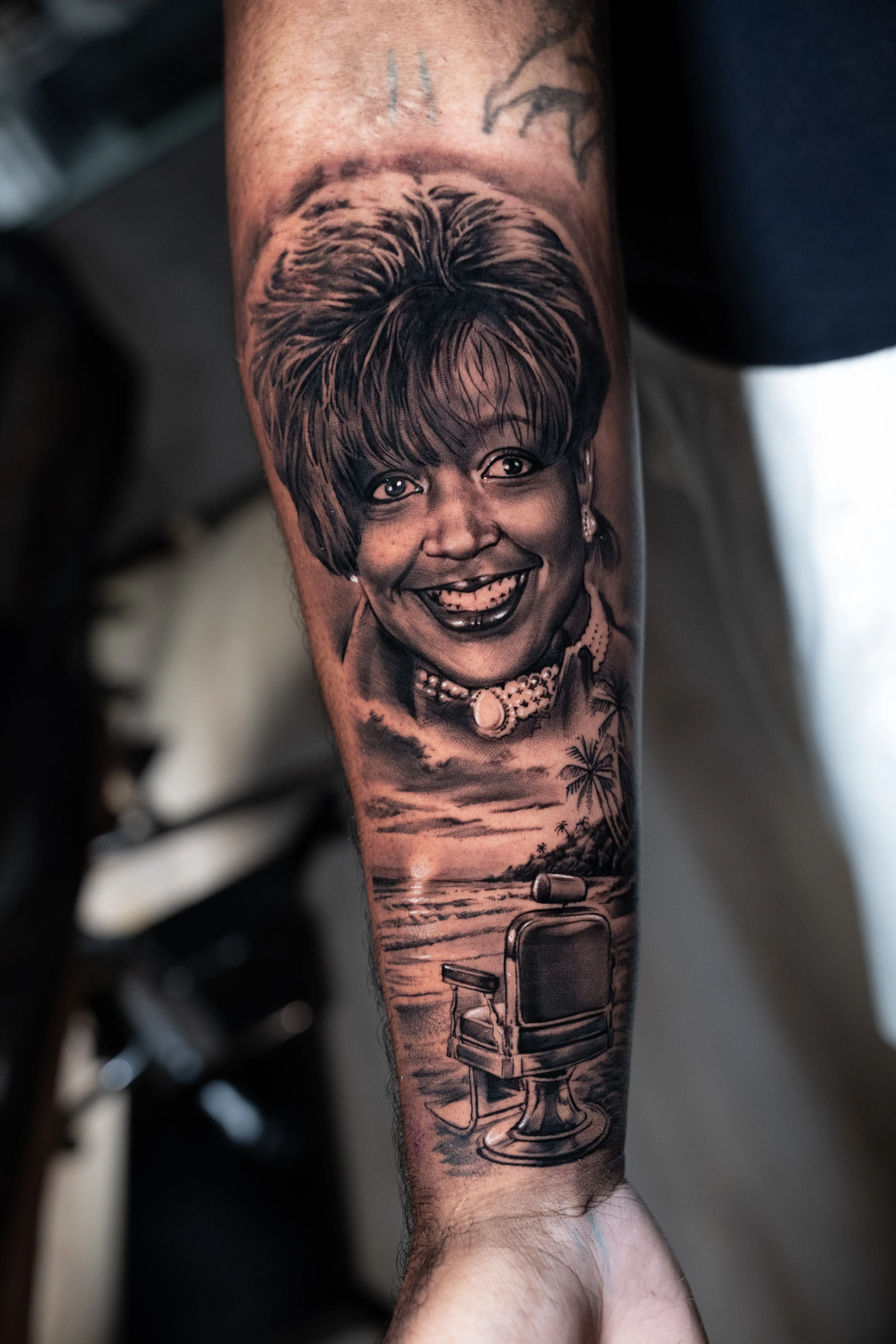
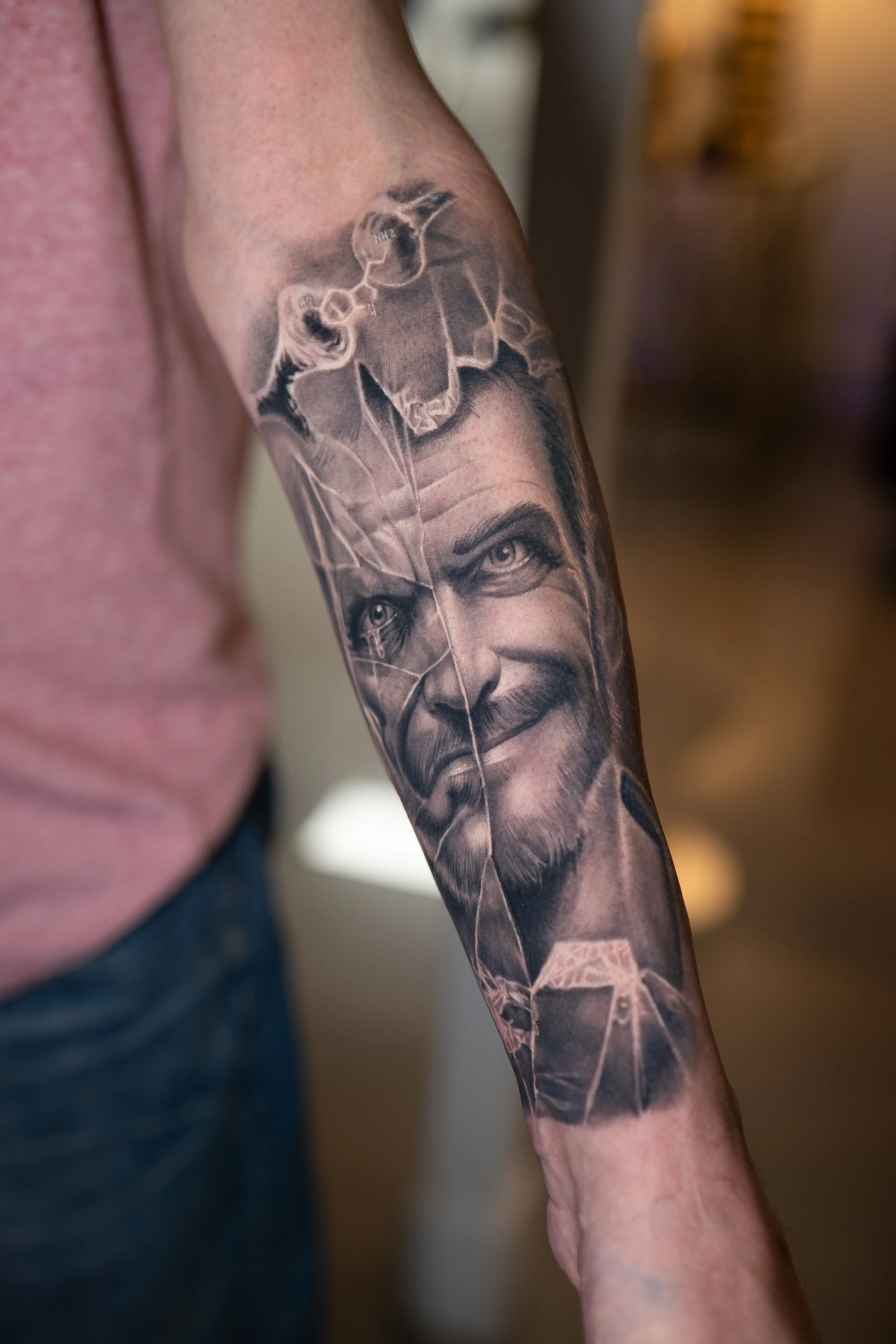
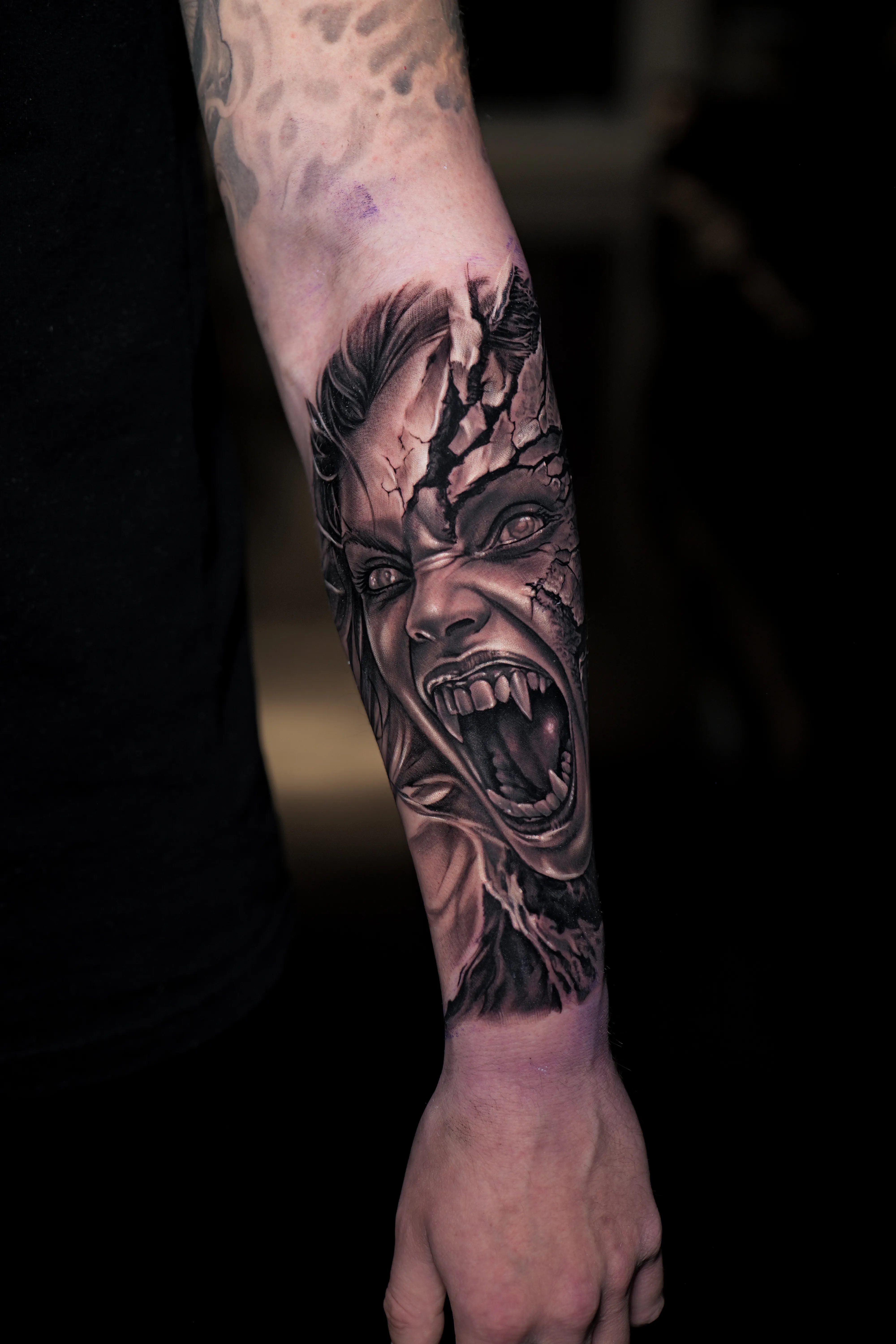
01
What makes a reference photo good enough
A good tattoo reference photo is a sharp, well-lit, original-resolution image where the subject fills the frame and the detail you want tattooed is clearly visible. For a realism piece, the reference is the raw material — the artist can only reproduce the information the photo actually contains. Nothing that is blurred, dark, or filtered away in the source can be added back on skin. The short checklist below is what separates a photo an artist can work from and one that forces guesswork.
- High resolution — the original file straight from the camera or phone, not a screenshot, a social-media download, or a text-message copy.
- In focus — the eyes and key detail are crisp, not soft or motion-blurred.
- Even, soft lighting — form is described by gentle shadow, with no blown-out highlights or crushed blacks.
- The subject fills the frame — you can see skin texture and features, not a tiny face in a wide shot.
- No heavy filters — no beauty-smoothing, no strong color grading, no stickers or text over the subject.
02
Resolution and sharpness come first
Resolution is the single quality you cannot fake. Enlarging a small or blurry photo does not add detail — it only enlarges the blur, so the pores, hairs, and micro-shadows the artist needs simply are not there to trace. Modern phones already shoot far more detail than a tattoo needs. The problem is almost never the camera — it is how the photo travels to the artist.
What preserves detail
- The original photo file, sent as an attachment or a cloud link (email, AirDrop, Google Drive, Dropbox).
- A recent photo taken on any modern phone at its normal quality settings.
- The full, uncropped frame — the artist can crop, but cannot un-crop detail you removed.
What quietly destroys it
- Screenshots — they capture only what fits your screen, throwing away most of the resolution.
- Images saved from Instagram, Facebook, or WhatsApp — every platform re-compresses and strips detail.
- Photos sent as a standard (non-original) text message, which shrink the file to save data.
- Digitally zooming in before you send — zoom with your feet, not your fingers.
03
Lighting is what realism is made of
Realism is not drawing an object — it is reproducing how light falls across it. That means the lighting in your reference is not a detail, it is the subject. Soft, directional light reveals the form; flat or harsh light erases it.
Lighting that helps
- Soft, even light from one main direction — a window in daytime, or open shade outdoors, is ideal.
- A gentle gradient from light to shadow across the face, which is exactly the depth the artist rebuilds in ink.
- Natural skin tone and texture visible, with pores and fine detail intact.
Lighting that hurts
- Direct on-camera or phone flash — it flattens the face and deletes the shadows that give it shape.
- Harsh midday sun or a single hard bulb — blown-out highlights and pure-black shadows lose all the mid-tones.
- Mixed or colored light (neon, sunset, screen glow) — it misleads value in a black & grey piece.
04
Angles and faces: match the reference to the tattoo
The right angle is the one that shows the tattoo you actually want. A photo taken from below or at arm's length distorts proportion — a selfie enlarges the nose and shrinks the forehead, and that distortion transfers straight to the skin. For portraits, more than one photo is not a luxury. A front view plus a slight three-quarter angle lets the artist read the true bone structure instead of guessing at it.
- Photograph the subject straight on, at eye level, from a step or two back — then crop in, rather than shooting up close.
- For a portrait, send several photos of the same person: a clear front view and a natural three-quarter angle.
- Keep the eyes open, sharp, and unobscured — no sunglasses, and no hair or hats hiding the features you want.
- Choose an expression you can live with for life; a genuine, relaxed face reads better than a forced one.
- For objects, animals, and scenes, match the viewing angle to how the piece will sit on the body.
It is completely normal to combine references — the face from one photo, the pose or composition from another, a texture from a third. A good realism artist expects to build the final image from several strong sources. What they cannot do is build a strong image from one weak source.
05
What a weak reference actually costs
Being honest about limitations is part of doing realism well. An artist can refine, but cannot invent. When the source is poor, one of three things happens: the piece takes longer, the likeness drifts, or the artist has to decline the reference and ask for a better one.
| Reference quality | What the artist gets | Result on skin |
|---|---|---|
| Sharp, well-lit, original file | Real texture, true values, clear features | A faithful likeness that reads as a photograph and ages predictably |
| Low-resolution or blurry | Guesswork where detail should be | Softened features and invented detail that may not resemble the subject |
| Flat flash or harsh light | No shadow structure to map depth from | A flat, mask-like piece with weak dimension |
| Heavily filtered / beauty-smoothed | Skin with the pores and micro-shadows deleted | Plastic-looking skin the artist must reconstruct from scratch |
| Single distorted selfie | Warped proportion, one angle only | A likeness that feels "off" in a way that is hard to name |
Beauty filters are the most common hidden problem. They smooth away exactly the texture — pores, fine lines, subtle shadow — that makes tattooed skin read as real skin. A face that looks flawless on a phone screen often gives the artist less to work with, not more.
06
How to work with your artist on references
Choosing and improving the source material is a shared job, and it happens before any needle touches skin. The best outcome comes from giving the artist options and trusting their read on what will translate.
- Send more than you think is needed — several photos let the artist pick the strongest and cross-check features.
- Send originals through a method that does not compress: email attachment, AirDrop, or a cloud-drive link.
- Say what matters most to you — the eyes, a specific expression, a particular detail — so the artist prioritizes it.
- Expect honest feedback. A realism specialist would rather ask for a reshoot than tattoo from a reference that will not hold up.
- If the only photo you have is imperfect (an old or a passed-away loved one), share it anyway and ask — an experienced artist can often plan around real-world limits.
Common questions
- What makes a good reference photo for a tattoo?
- A good reference is a sharp, well-lit, original-resolution photo where the subject fills the frame and the detail you want tattooed is clearly visible. Even, soft lighting and no heavy filters matter most, because a realism artist can only reproduce the detail the photo actually contains.
- Can a tattoo artist work from a blurry or low-quality photo?
- Only up to a point. Enlarging a blurry photo just enlarges the blur — the detail the artist needs is not in the file. A weak source usually means a softened likeness, invented detail, or a request for a better photo. It cannot be sharpened back after the fact.
- How many reference photos should I send for a portrait tattoo?
- For a portrait, send several photos of the same person — at minimum a clear front view and a natural three-quarter angle. Multiple angles let the artist read true bone structure and proportion instead of guessing from a single, possibly distorted, shot.
- Why can’t I just send a screenshot or a photo from Instagram?
- Screenshots capture only what fits your screen, and social platforms re-compress every image — both throw away most of the original resolution. Always send the original file as an attachment or a cloud-drive link so the artist receives the full detail your camera captured.
- Do beauty filters affect a realism tattoo?
- Yes, and usually for the worse. Beauty filters smooth away the pores, fine lines, and subtle shadows that make tattooed skin read as real skin. A flawless-looking filtered photo often gives the artist less to work with, so send an unfiltered original whenever possible.
Choosing an artist for a realism piece?
See the work, then apply. Hector reviews each project personally and takes on a limited number of commissions — there's no pressure to book, only to choose well.